


- Article
Circular packaging: From ambition to business requirement
Circular packaging has been a key ambition in the packaging industry for years. Now, driven by the EU's Packaging and Packaging Waste Regulation (PPWR), circularity is becoming a business requirement. Drawing on insights from Billerud's new trend report Packaging Tomorrow, this article takes a closer look at what this transition means in practice for sustainable packaging.
How new packaging regulations are accelerating circularity
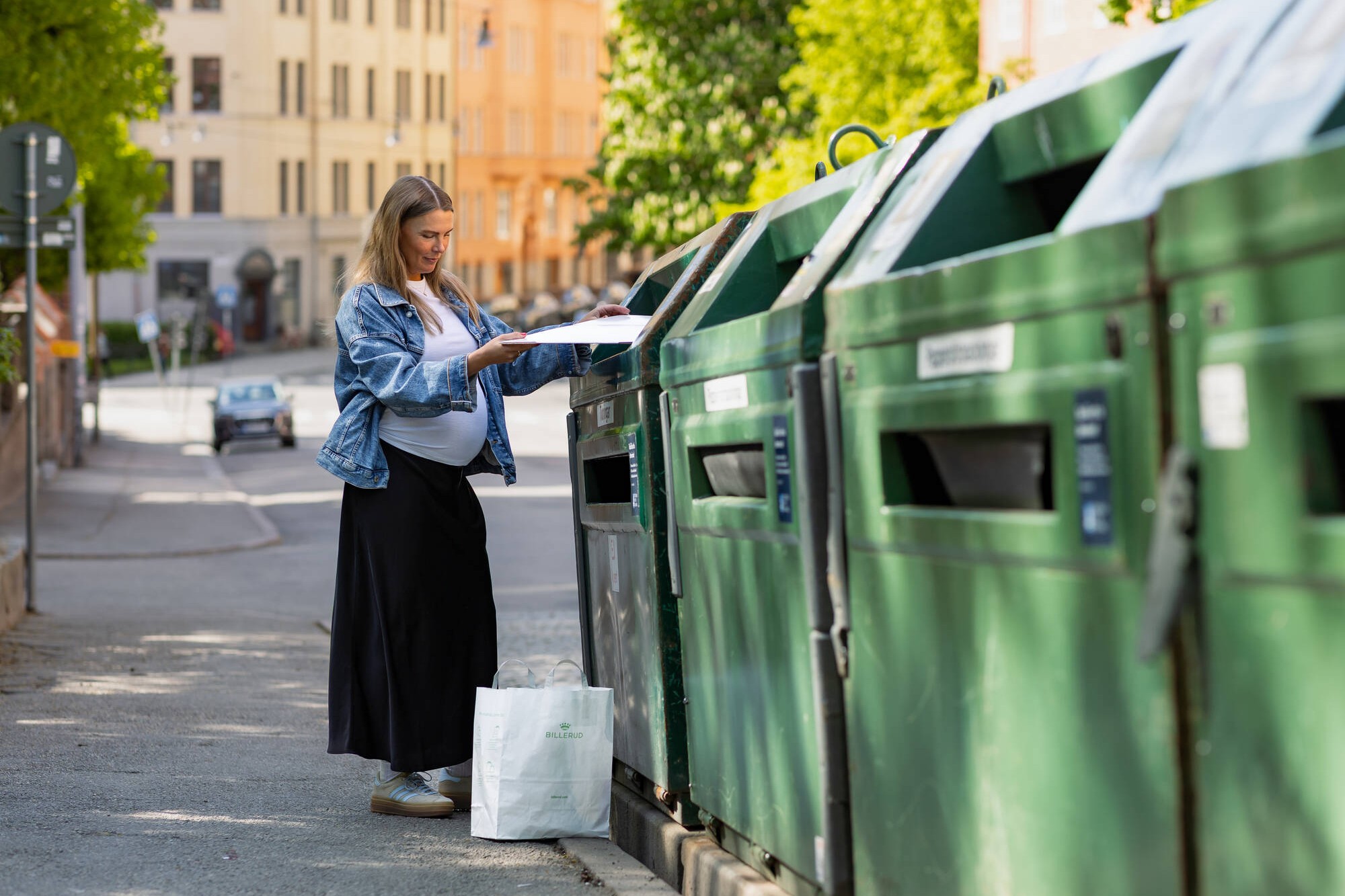
From 12 August 2026, the EU’s Packaging and Packaging Waste Regulation (PPWR) applies, introducing new requirements for recyclability, reuse, and packaging design. At the same time, EPR schemes are increasingly linking packaging design to producer costs, while new rules are raising the bar for environmental claims. Consumers are also raising expectations. Research shows that recyclable packaging is one of the most important sustainability attributes influencing purchasing decisions [1]. Yet many consumers still struggle to recycle correctly. In the UK barely one in ten consumers feel very confident about understanding which materials can and cannot be recycled [2].
Why companies need to prepare for circular packaging
Despite growing pressure from regulation and consumers, many companies still underestimate both the scale and complexity of the transition to circular packaging. Industry experts point out that developing, testing, and scaling circular packaging solutions across the value chain takes time, while many organizations still lack the operational readiness needed to implement change at pace.
Industry research reflects the same challenge. Several major brand owners have already revised or delayed their packaging targets [3], while a UK packaging audit found that more than one third of assessed packaging components were only partially recyclable or non-recyclable [4].
According to Anna Jonhed, VP Global Innovation at Billerud, companies can no longer afford to treat circularity as a future ambition.
The transition to circular packaging is one of the most significant shifts our industry has ever faced. It is no longer a question of whether companies need to adapt, but how quickly they can do so. Those who begin transforming their packaging and value chains today will be best positioned to lead the market tomorrow.
Why circular packaging is about more than recycling
The challenge is that this transition is about far more than meeting a single requirement or replacing one material with another. According to industry expert Ron Sasine, one of the biggest barriers to progress is oversimplification.
Circularity is often reduced to a single question: is it recyclable or not? But recycling is only one part of a larger system. Sustainable packaging also includes emissions, energy use, sourcing, toxicity, efficiency, and how materials move through the system.
This highlights the growing gap between circularity in theory and circularity in practice. As regulations accelerate, companies best prepared for the future will be those that design packaging for the systems that exist today while preparing for the systems of tomorrow.
What this means for packaging professionals
- Design for real-world systems. Develop packaging based on how infrastructure, regulations, and consumer behavior function in each market, and ensure solutions are easy to sort, handle, and process in practice.
- Adopt a systems-thinking approach from the start. Balance circularity with climate impact, cost, performance, and material supply early in the development process to avoid late-stage compromises and accelerate implementation.
- Help consumers navigate circularity. Reduce confusion through clear recycling instructions and packaging designed to work within existing collection and recycling systems.
Want to know more?
Want to know more about circular packaging and sustainable packaging trends? Read the full Packaging Tomorrow report to explore Circularity Reality and five other trends shaping the future of high-performance packaging.
